Don Leo is the coffee farmer who welcomes WakeCup Tour guests to Villa Gloria, his farm in the mountains above Pijao, a small town in Colombia's Quindío department. He comes from the neighbouring region of Cauca, started working in coffee at the age of twelve and has farmed Villa Gloria for thirteen years, where he and his family grow, bag and sell their own specialty coffee. This is what Villa Gloria is like, what comes out of it, and what happens on the afternoon you sit down at his table.
Who is Don Leo?
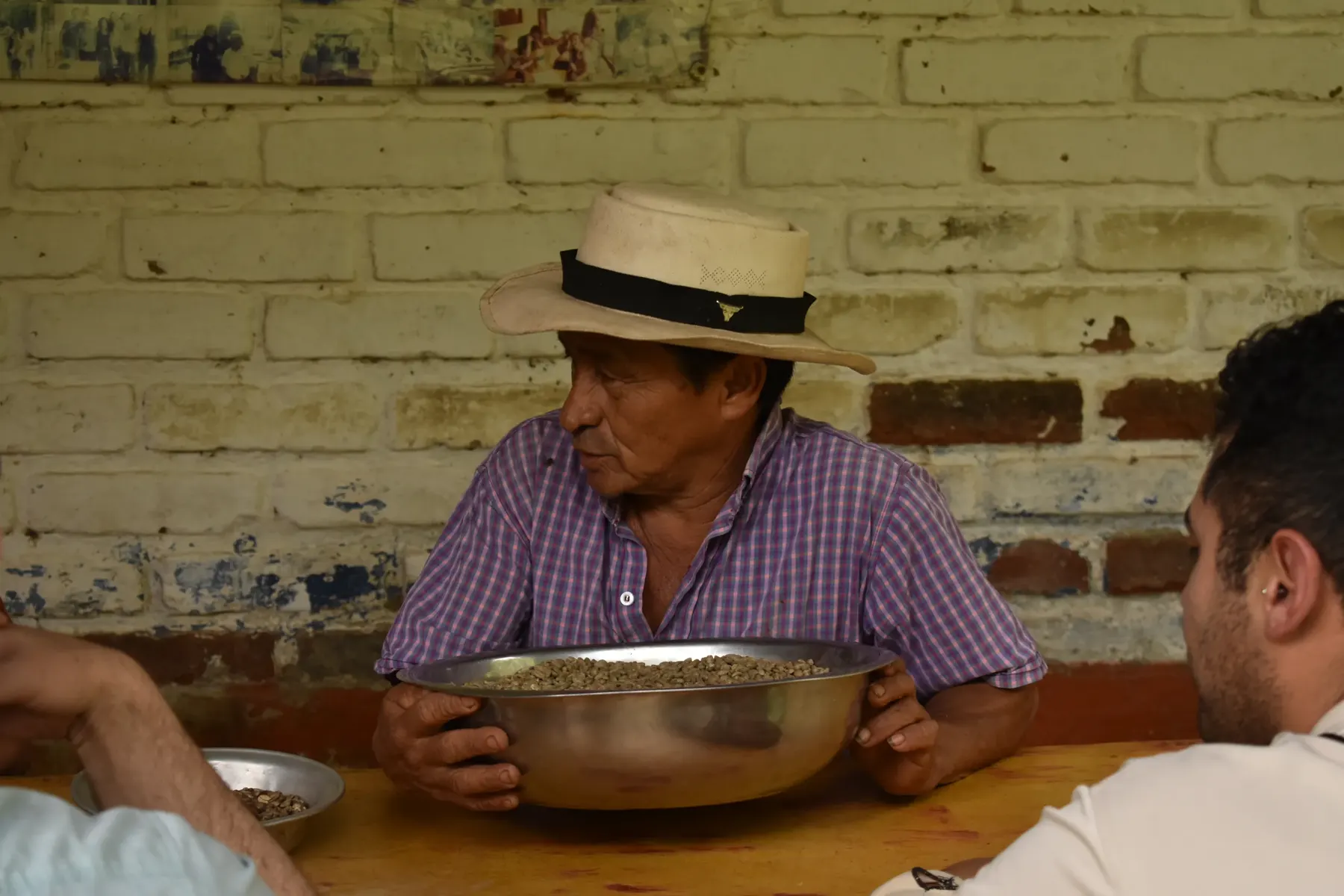
For many travellers, Don Leo is the heart of the WakeCup. People who have spent an afternoon with him describe him in much the same way: warm, funny, full of passion and knowledge. When the group arrives at the farm, he appears from among the coffee trees.
He introduces himself in a few words. In a video we recorded with him in May 2026 he said, in Spanish, that he comes from Cauca and has been on this farm for 13 years. What that sentence leaves out is all the work behind it: he started working in coffee at twelve, and coffee has been his life ever since.
He does not work for a big coffee brand. He works for himself, his family and his land, and you notice that difference in everything that happens on the farm.
What is Villa Gloria like?
Villa Gloria lies in Pijao, inside Colombia's Coffee Cultural Landscape, which UNESCO added to its World Heritage List in 2011. The listing does not honour a monument: it honours farms like this one, where people still live from coffee and for coffee.
It is a long farm, stretching from the river to the top of a mountain. That means it has no single altitude: its reference point sits at about 1,550 m above sea level, but each plot ranges from roughly 1,300 to 1,700 m. That matters, because coffee changes with the altitude it grows at.
The farm belongs to Don Leo and his wife. When they arrived there was little to show. In his own words, translated from Spanish: "when we bought this farm it had nothing; we had to start from the seeds." According to Huck Magazine in 2019, they cleared the land and replanted some thirty thousand coffee trees by hand. What you see when the Willys pulls in is the result of that work.
What coffee grows at Villa Gloria?
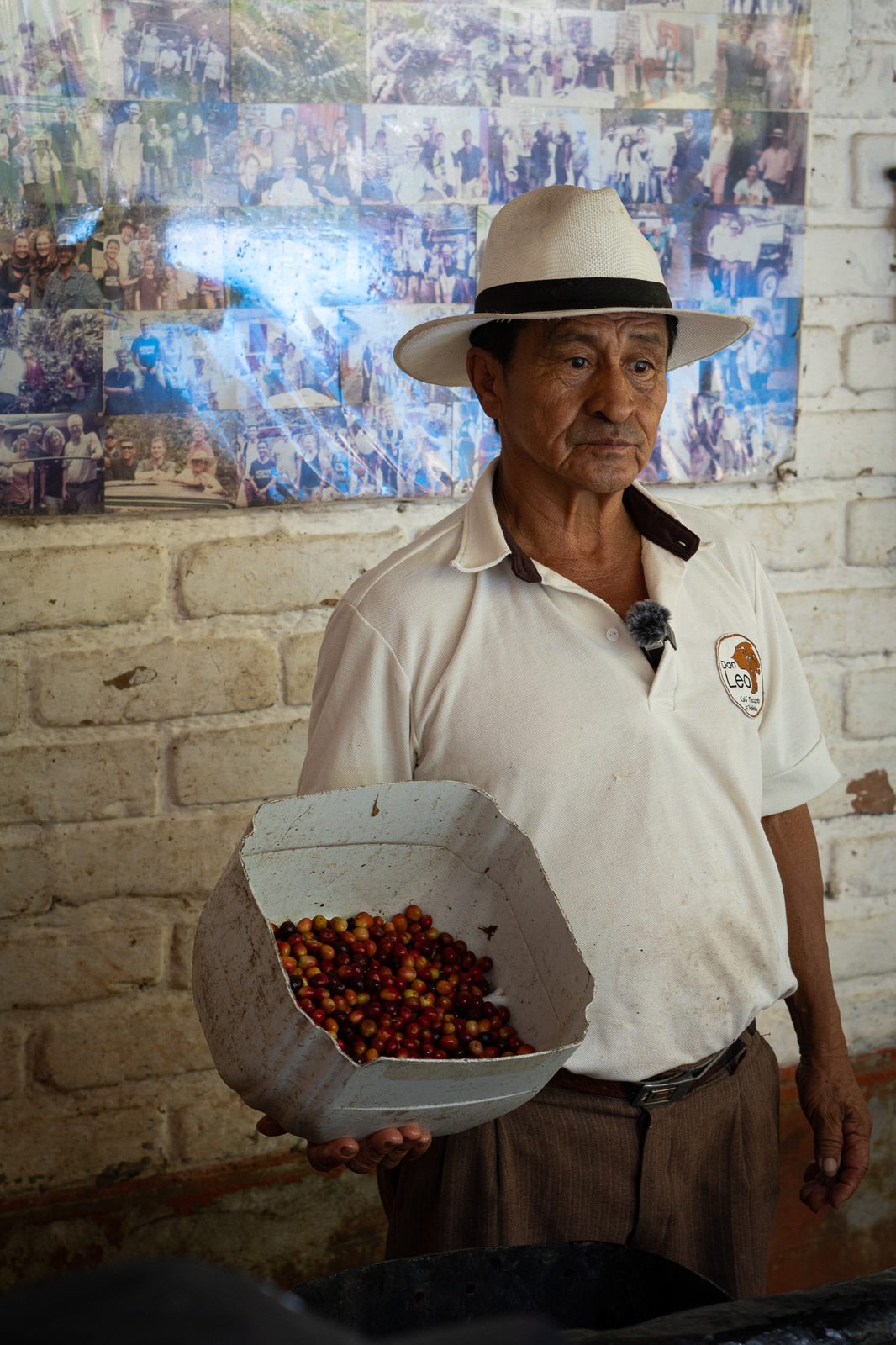
Three varieties are planted at Villa Gloria: Castillo, Papayo and Bourbon. Three different plants, on a farm with different altitudes, give a harvest with a lot to explore.
What defines Don Leo's coffee most, though, is what happens after the harvest. He puts it in one line: they are working with washed, honey and natural coffees. Those are three ways of turning a cherry into a bean ready for roasting, and each one leaves a different cup.
Washed, honey and natural: what is the difference?
The same coffee, from the same tree, tastes different depending on how the pulp comes off and how it dries. At Villa Gloria all three are dried in the sun, under plastic-covered drying beds:
- Washed: the pulp is stripped off and the bean ferments before it dries. Here fermentation takes 18 to 20 hours and drying three to four days. A clean, bright cup; it is the classic Colombian process.
- Honey: the skin comes off but part of the sweet mucilage stays on, the "honey" that gives it its name. It ferments for about 36 hours and dries for five to six days. The cup gains body and a sweetness close to panela, Colombia's unrefined cane sugar.
- Natural: the bean dries inside the whole fruit, which hands over its sweetness. At Villa Gloria it ferments for about 80 hours and dries for 12 to 15 days. The cup comes out fruitier and more intense.
For the whole journey from flower to roaster, read From Cherry to Cup.
What happens on an afternoon at the farm?
The visit to Villa Gloria is the afternoon part of the WakeCup Tour, which starts at 10:00 a.m. in Pijao's main square. Around one o'clock a Jeep Willys takes the group up the country road to the farm.
Lunch with his family
First comes the table. Don Leo's family cooks a country lunch with produce from their own garden: farm food, not a restaurant menu. If someone does not eat meat, there is a vegetarian or vegan option if you let us know in advance.
The process, told by the person who does it
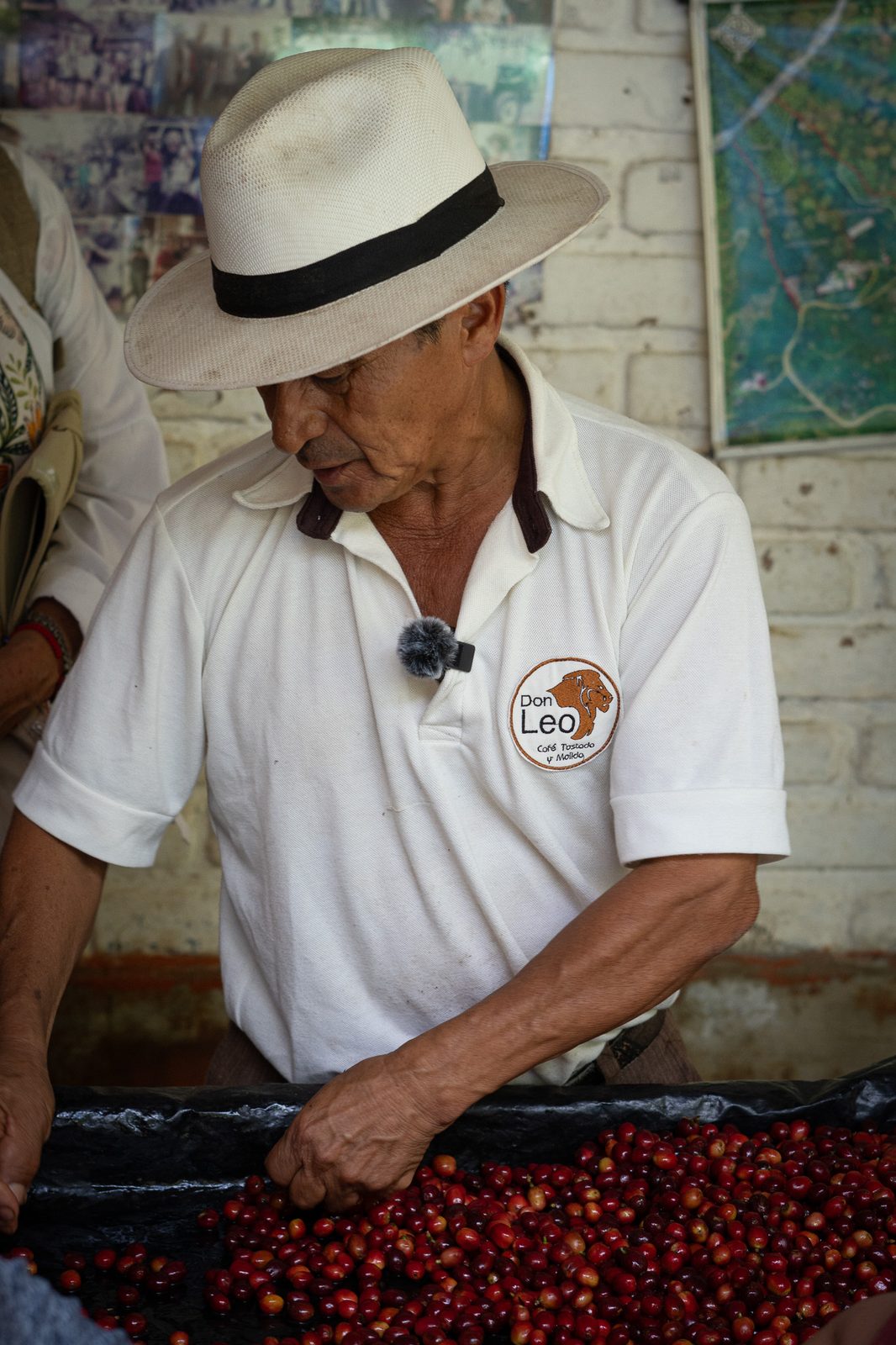
Then you walk the coffee plot. Don Leo explains the process in his own words; as he puts it, here you see it from the seed all the way to the cup. The group picks alongside his family and learns to choose only the ripe cherries, then sees the pulping, fermentation and drying.
Roasting and cupping
The farm visit ends with small-batch roasting alongside the growers and a cupping of specialty coffees. This is where the difference between one process and another becomes obvious without any theory: you smell it and you taste it.
What do people who have met him say?
We would rather let travellers speak. These reviews appear on the tour page:
- "Don Leo showed us the whole process, from start to finish, of how he grows and processes his own specialty coffee… It was my best day in the whole month I spent in Colombia." (Tripadvisor)
- "I especially liked how we got a complete picture of how coffee growing works in Colombia, visiting the beloved Don Leo and his farm." (Tripadvisor)
- "Don Leo's explanation of the coffee process was super interesting." (Google)
What almost everyone values most is not the scenery, although there is plenty of it. It is meeting the real person behind the coffee.
Why buy his coffee directly?
Because it is the shortest possible supply chain. When you buy from Don Leo at his farm, the money goes straight to the person who planted, picked and processed those beans. That is the idea Experiencia Cafetera was born with: to work with the people who work the land, so that their coffee is valued as it deserves.
Don Leo believed in tourism early on. He told Huck Magazine so in 2019: "I believed in [the power of tourism] from the beginning."
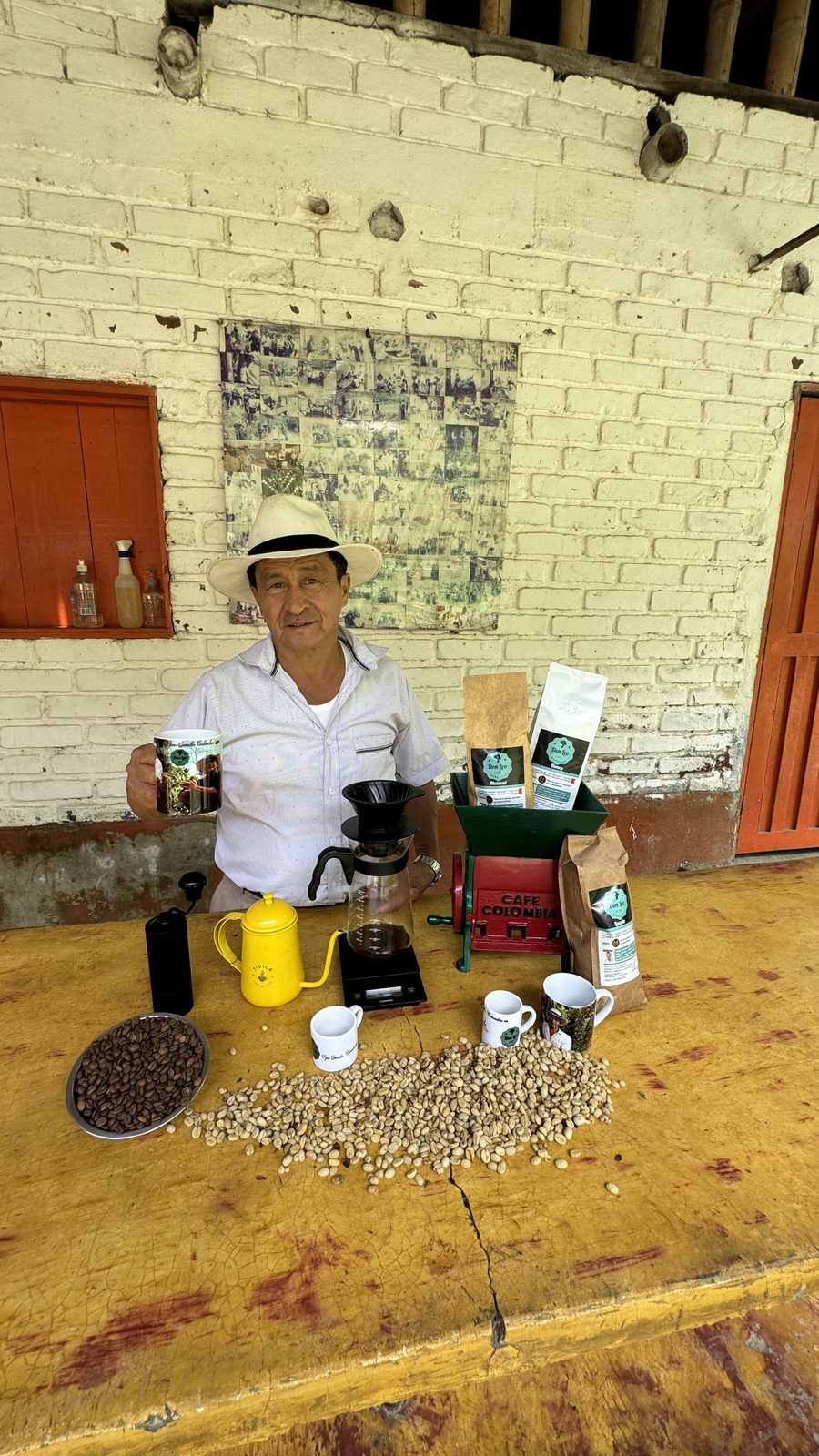
On the day of the tour you can buy his coffee, sold as Café Don Leo, at the farm; bring cash, since it is a direct purchase from the grower. If you want to keep drinking it at home, even outside Colombia, shipping and online orders are on www.cafedonleo.com.
How can I meet Don Leo?
The way to his table is the WakeCup Tour. You can book it privately or, if you are travelling solo, join a group departure on our group calendar. If you want to see the day in short videos first, have a look at the WakeCup page.
Don Leo is not the only one who makes this place what it is. In The People Behind Your Cup you will also meet Doña Ligia, Doña Orfilia and others who make Pijao's coffee possible.
Message us on WhatsApp and we will tell you when you can sit down at the table at Villa Gloria.
Keep reading
- To see how it all fits into one outing, read our hour-by-hour coffee farm tour guide.
- To book or see what's included, go to the WakeCup Tour page.