A real coffee farm tour in Colombia is a full day with the people who grow, sell and drink the coffee, not a demonstration staged for visitors. Ours is the WakeCup Tour in Pijao, a small town in the south of Quindío, in the heart of Colombia's coffee region: six hours that start at 10:00 a.m. in the town square, stop at the growers' co-operative, ride a vintage Jeep Willys up to Don Leo's farm for lunch, harvesting, roasting and cupping, and close at Café La Floresta, Doña Orfilia's coffee brand. Here is what happens, hour by hour, and how to plan it.
What makes a coffee tour "real"?
If you search for coffee tours in Colombia you will find theme parks, large estates with a visitor circuit, and day trips from Salento. They can all be good days out. What we have cared about from the start is simpler: that the farm is a working farm that lives from coffee, that the person explaining the process is the person who does it, and that the money from your visit stays with those families.
Pijao lies inside the Coffee Cultural Landscape of Colombia, a UNESCO World Heritage Site since 2011. The listing does not honour a monument. It recognises the bond between coffee culture and the Andean landscape, and the ways of life that are still very much alive. Don Leo's farm, Villa Gloria, is one of the farms that make up that landscape. It is his home and his work, not a set.
So the day is not built around a photo stop. It is built around three questions anyone who drinks coffee has asked at some point: how do Colombians drink it, how is it bought and sold, and how is it grown?
Where does it start and how long does it take?
We meet in Pijao's main square, in front of the church, at 10:00 a.m. The team waits with a sign with your name on it, so you don't need to look for anyone. The tour ends around 4:00 p.m.
Groups are small, ten people at most, and our guides speak English and Spanish. The order of the stops can change on the day: we adjust it so the visit flows with the life of the town and everyone gets proper attention. Travelling solo? You can join one of the scheduled group departures on our group calendar.
Practical details, current rates and availability are on the WakeCup Tour page.
10:00 a.m. · How Colombians drink their coffee
The morning begins in town, because that is where coffee is actually drunk: in the square, in the shops, in conversation. This first part of the day is about how Colombians drink and live with coffee every day: your guide explains what a cup looks like in the daily life of a coffee-growing family.
From there we walk to El Patio, the medicinal plant nursery looked after by Doña Ligia. She knows every plant by the name she learned at home, and what each one is good for. It is a short stop, but it changes how you look at the countryside: a farm grows far more than coffee.
11:30 a.m. · How coffee is bought and sold
Late morning is about trade. We visit the town's coffee growers' co-operative, where you see how beans are bought and sold in Colombia and why co-operatives matter so much to small producers.
Then we stop at Carlos Arturo's shop on the square. He grows, processes and bags his own coffee and sells it straight to the people who will drink it. It is the shortest possible version of the supply chain: from the tree to your hand, with nobody in between. If you want to take coffee home, this is a good moment to buy it, in cash, from the person who grew it.
1:00 p.m. · A Jeep Willys up to Don Leo's farm
At one o'clock we climb into a Jeep Willys, the traditional workhorse of Colombia's coffee culture. The ride is part of the day: it is the panoramic Jeep experience included in the tour.
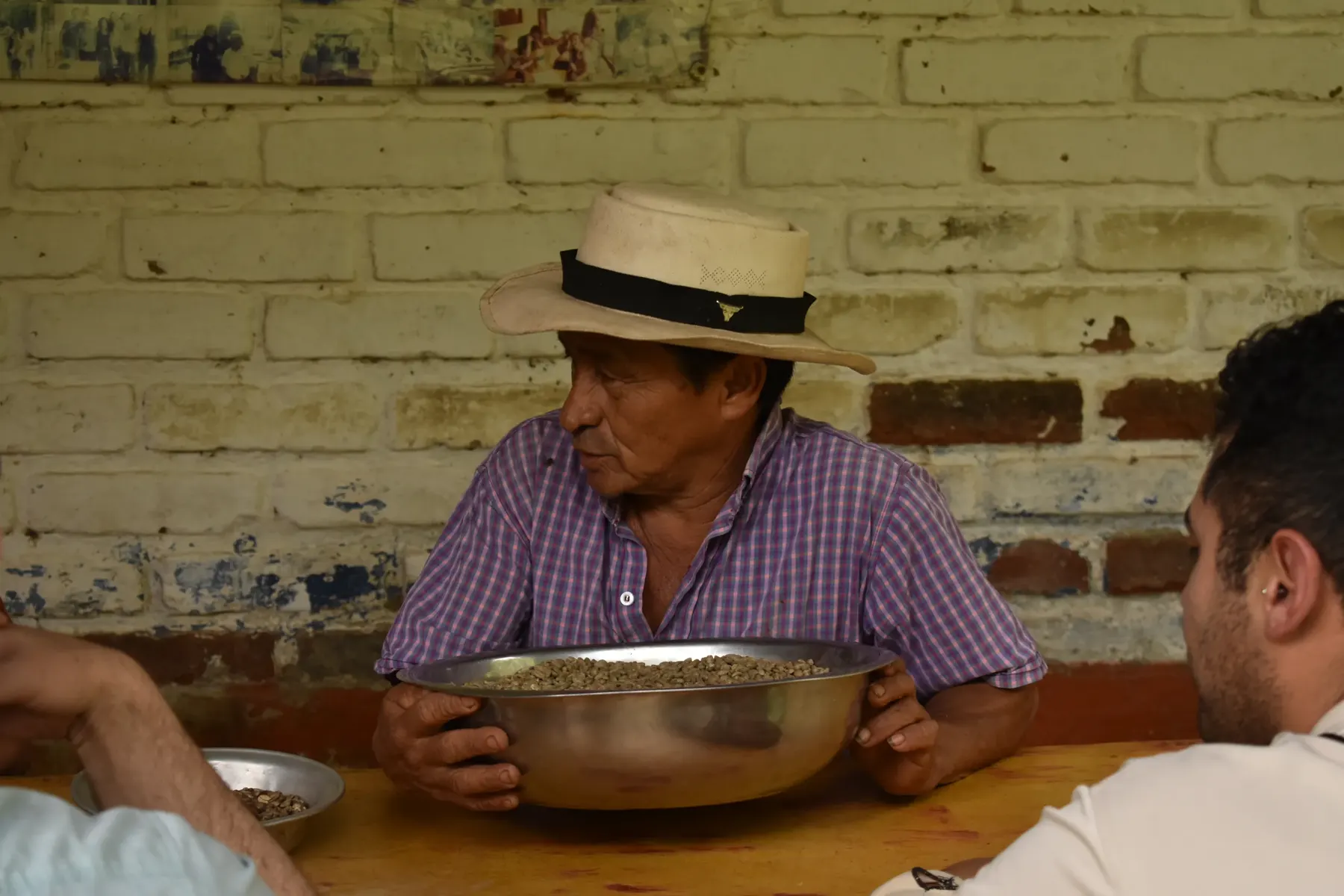
Don Leo comes out to meet the group from among his coffee trees. Together with his family he grows, bags and sells his own specialty coffee at Villa Gloria, and he is the one who walks you through every step of the process.
Lunch at the farm table
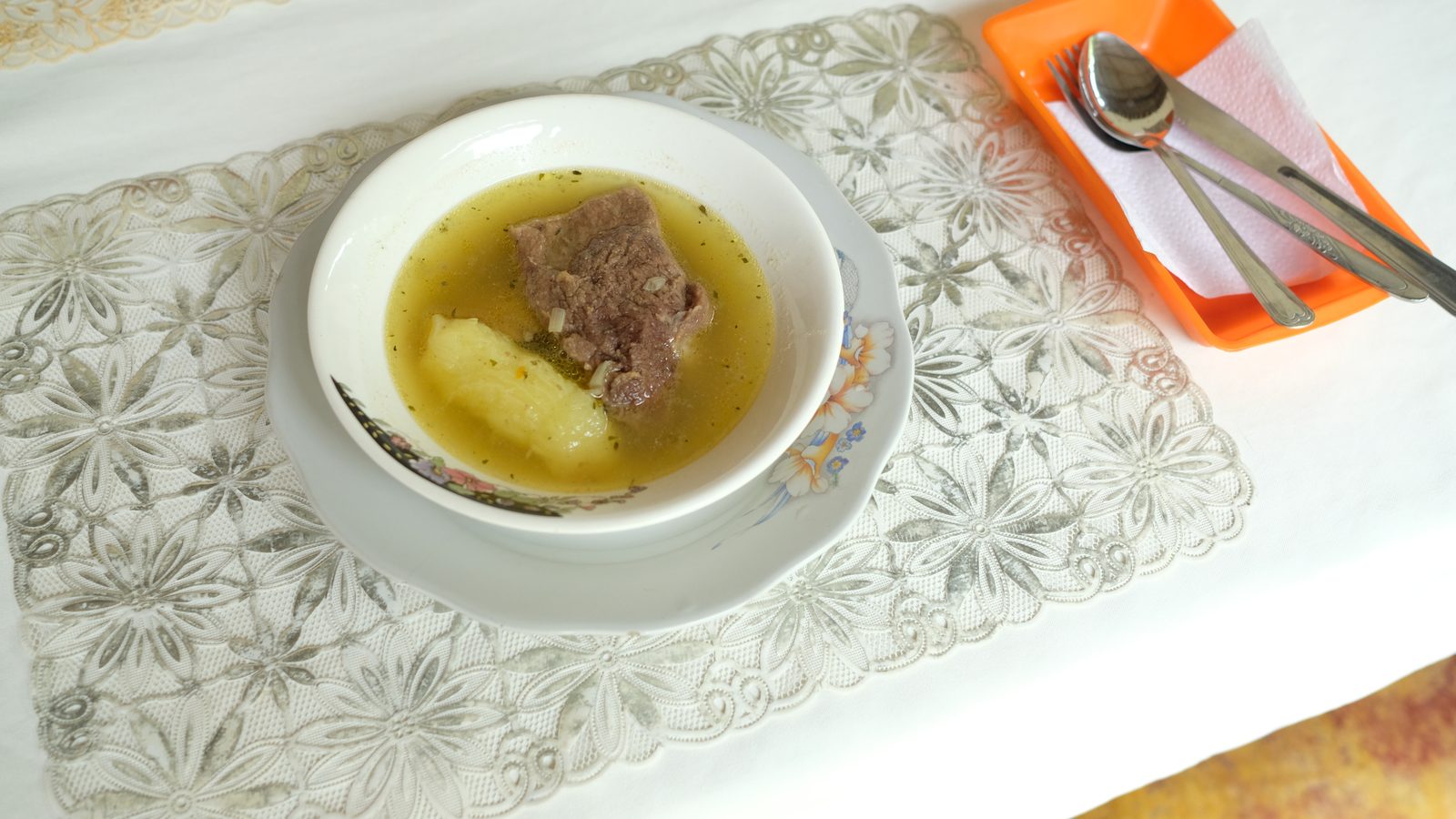
First comes the table. The host family cooks a traditional country lunch over a wood fire, with produce from their garden and the surrounding land, such as a sancocho or a beef broth. It is not a restaurant menu; it is what people eat on the farm. A vegetarian or vegan option is always available if you ask when booking.
Picking and processing
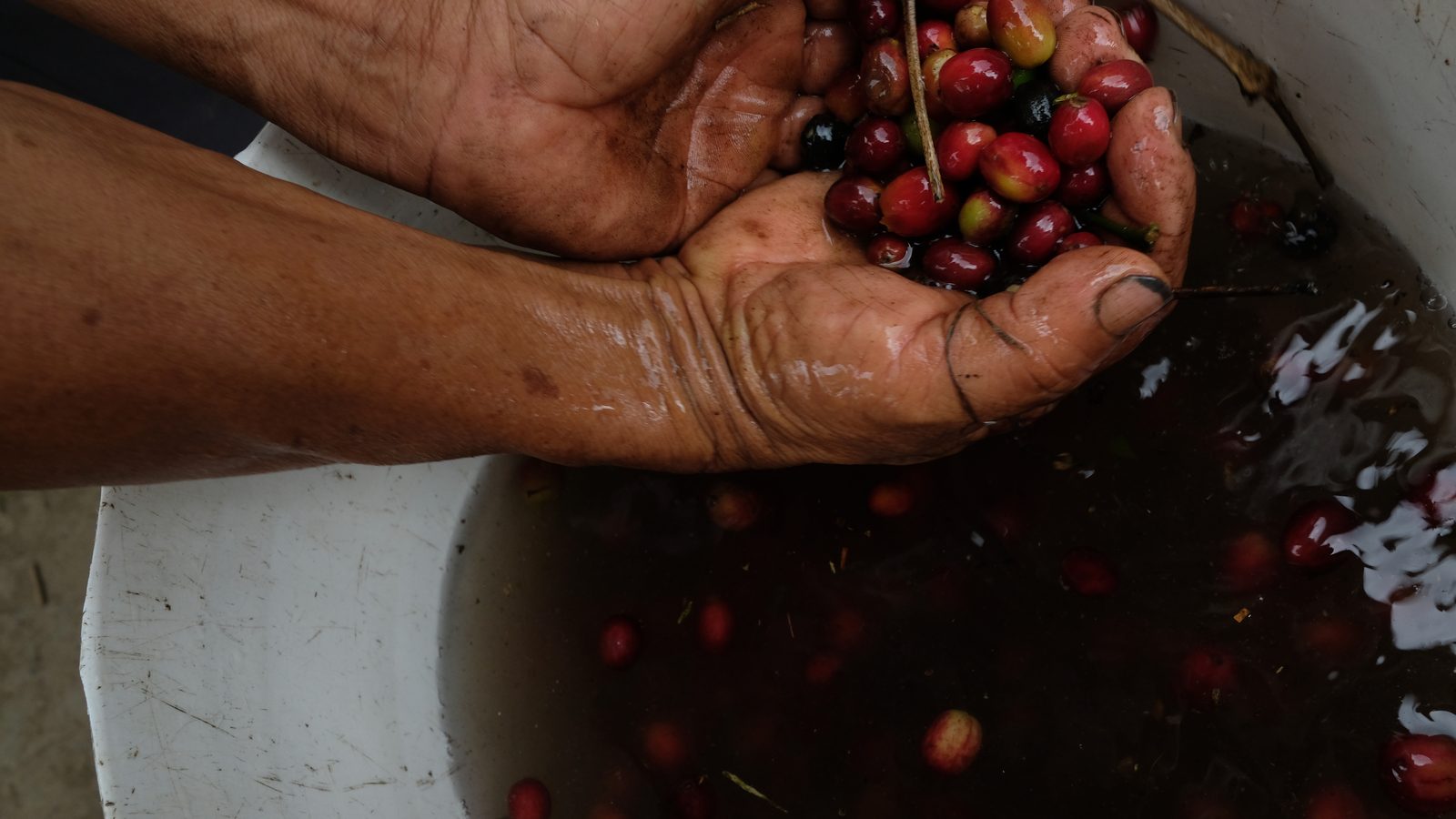
After lunch you walk through the coffee plot. In harvest season you pick with a basket alongside Don Leo's family and learn to choose only the ripe cherries. Then comes the processing that happens before any roaster: pulping, fermentation and drying. For the full process step by step, read From Cherry to Cup.
Roasting and cupping
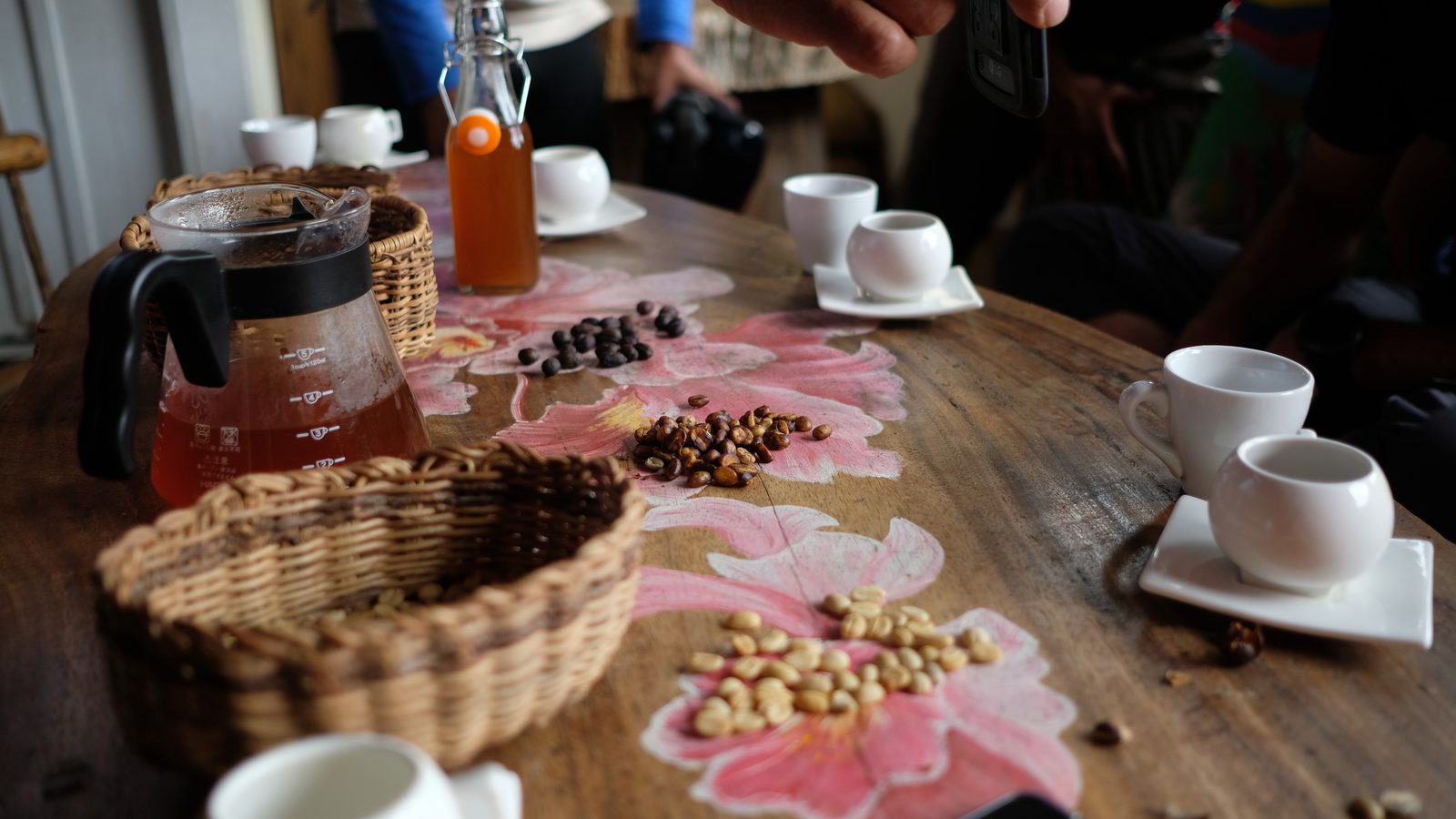
The farm visit ends with small-batch roasting alongside the growers, followed by a cupping of specialty coffees. This is where it clicks why altitude, variety and roast change what ends up in the cup. You don't need to know anything about coffee: just smell, taste and ask.
The last stop: Café La Floresta
The day closes at Café La Floresta, the brand of Doña Orfilia, a Pijao grower who has spent some fifteen years adding value to her own coffee. It is the ending that makes sense: after seeing how coffee is grown and how it is sold, you buy it straight from the person who grew it.
Who is this tour for?
The physical effort is very low. You walk around town and around the farm at an easy pace, and the climb into the mountains is done by Jeep. Families with children, older travellers and groups of friends all do it. If anyone in your party has reduced mobility or a medical condition, tell us when you book and we will adapt the day.
You don't have to drink coffee either. Several guests who never touch it have told us it was the biggest surprise of their trip, because the day is as much about people, land and food as it is about coffee. One review put it better than we can: you stop being a spectator and become part of the process.
What to bring and how to get to Pijao
Bring comfortable walking shoes, insect repellent, sunscreen and a light jacket: mountain weather changes during the day. If it rains, the tour still runs; we adapt it. Bring some cash as well, since you can buy specialty coffee directly from the growers along the way.
Pijao is in southern Quindío, 45 minutes to an hour by road from El Edén airport in Armenia. Transport to Pijao is not included in the tour, but we can arrange it from Armenia, Salento or Buenavista. If you stay at one of our partner lodges, we arrange the pick-up there.
How do I book?
Send us your date and the number of people and we will confirm availability. If you are still comparing options, our guide How to Choose a Coffee Tour in Colombia lists the questions worth asking any operator, us included.
Message us on WhatsApp and we will reply with availability for your dates.