The Coffee Cultural Landscape of Colombia is the country's coffee-growing heartland, inscribed by UNESCO on the World Heritage List in 2011 as a cultural property. It does not honour a single monument or building. It recognises the bond between coffee culture and the Andean mountains, and protects the traditions, architecture and ways of life of communities who still live from coffee as their grandparents did. Pijao, the small town in southern Quindío where we are based, is part of that landscape. Here is what the listing means and how it feels from the inside.
What exactly is the Coffee Cultural Landscape?
When people hear "World Heritage" they tend to picture a cathedral, a ruin or an old town centre. This is something else. What the world recognised here is a way of living on a mountainside: slopes planted with coffee, towns built around the bean, tracks that link the farm to the town square, and families who still make their living from that work.
That is why we say the heritage is not behind glass. It is in the farms and in the people who work them. Here, life revolves around coffee, from coffee and for coffee, and that shared way of life is, in itself, one of humanity's collective expressions.
World Heritage or intangible heritage?
It is a common mix-up, so it is worth clearing up. The Coffee Cultural Landscape is inscribed on UNESCO's World Heritage List as a cultural property. It is not on the intangible heritage lists. The difference matters: what is recognised is a whole landscape, with its farms, towns and people, rather than a practice or tradition separated from the place where it happens.
In Spanish it is called the Paisaje Cultural Cafetero, and many Colombians simply say the Eje Cafetero, the Coffee Axis. Travel guides often call the area the coffee triangle or the coffee region.
What does the listing protect?
UNESCO's recognition highlights three things you can actually see, hear and taste when you travel here:
- The unique relationship between coffee culture and the Andean landscape. Coffee is not simply planted on the mountain; the mountain is worked and lived on around coffee.
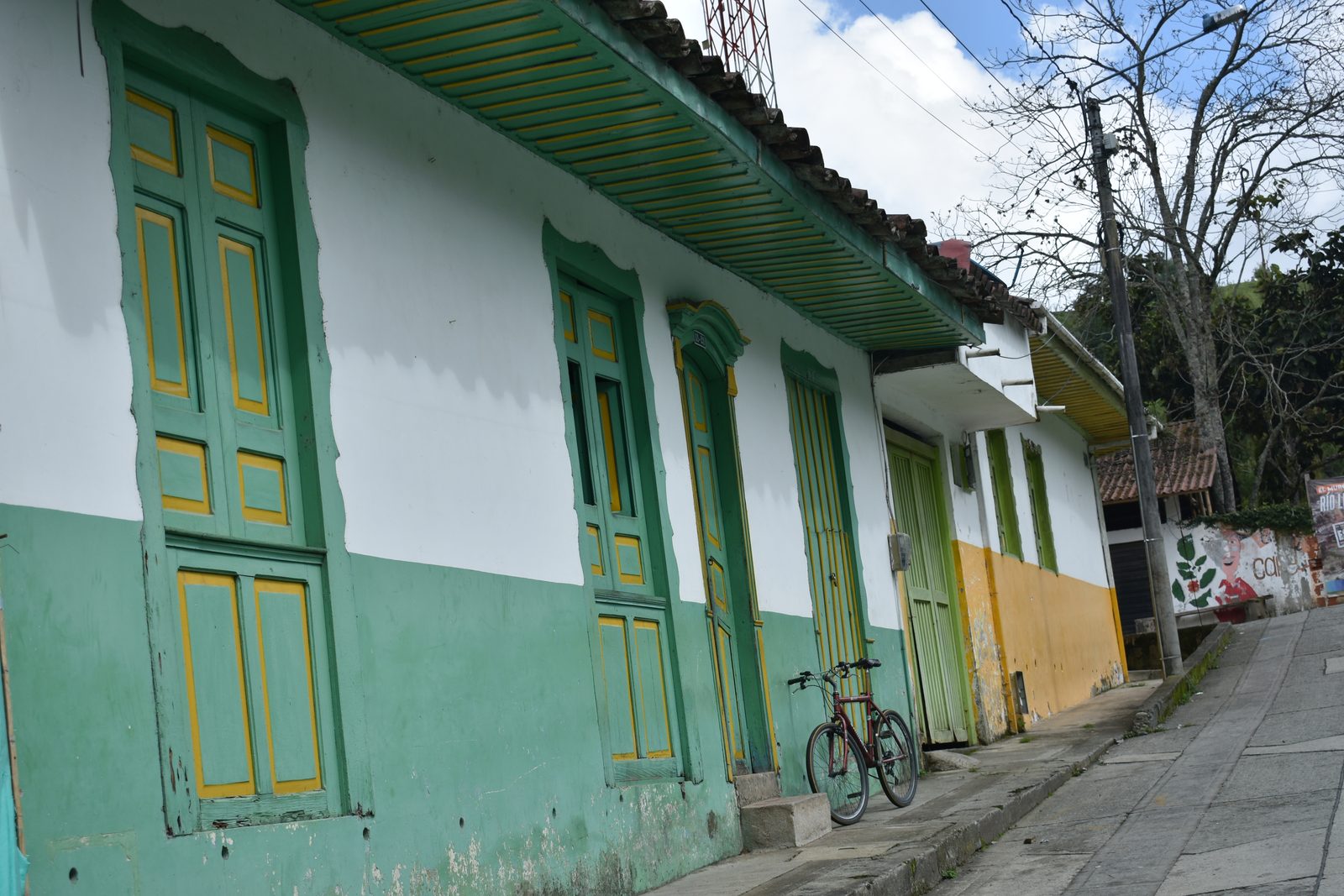
- Traditions, architecture and ways of life that are still alive. Colourful houses, garden courtyards behind the doors, and the town square as the centre of daily life.
- The authenticity of communities who live from coffee as their ancestors did. Nobody is recreating the past for visitors; this is a trade people still practise.
That last point is the one we care about most. We are not just another tourist attraction: we are part of a living heritage the world recognised as exceptional, and our job is to show it without dressing it up.
Why southern Quindío?
Quindío is Colombia's smallest mainland department, and it sits at the heart of the Coffee Cultural Landscape. Most visitors head to the best-known towns in the north, such as Salento or Filandia, and then leave the region. But from Armenia, in about an hour by road, you reach a very different side of the department: the southern mountains.
Buenavista, Pijao and Génova are a very faithful picture of the landscape. The architecture is intact, coffee traditions are part of the street life, and the landscape is shaped day after day by the people who live in it. Here the Jeep Willys, the same model the United States used in the Second World War, is not a prop: it is a working vehicle, alongside horses and mules, carrying people, cargo and harvest. Coffee and plantain grow side by side on the same slopes, and together they shape both the scenery and the local economy.
Pijao's town centre sits at around 1,600 m above sea level, and coffee is grown, on average, above 1,500 m: high-altitude coffee with character, planted on the same hills you see from the square. If you are weighing up the south against Salento, we compare them in Pijao: the same wax palms as Cocora, an hour and a half from Salento.
What does the landscape look like in a town like Pijao?
Pijao is tucked into the landscape. The orange bell tower rises above the houses like a tulip, and every façade has its own colour. Behind the colourful doors are gardens where town and countryside blend. A river of cold water runs down from mountain springs straight through town, and a couple of blocks from the square, egrets arrive in large flocks to nest.
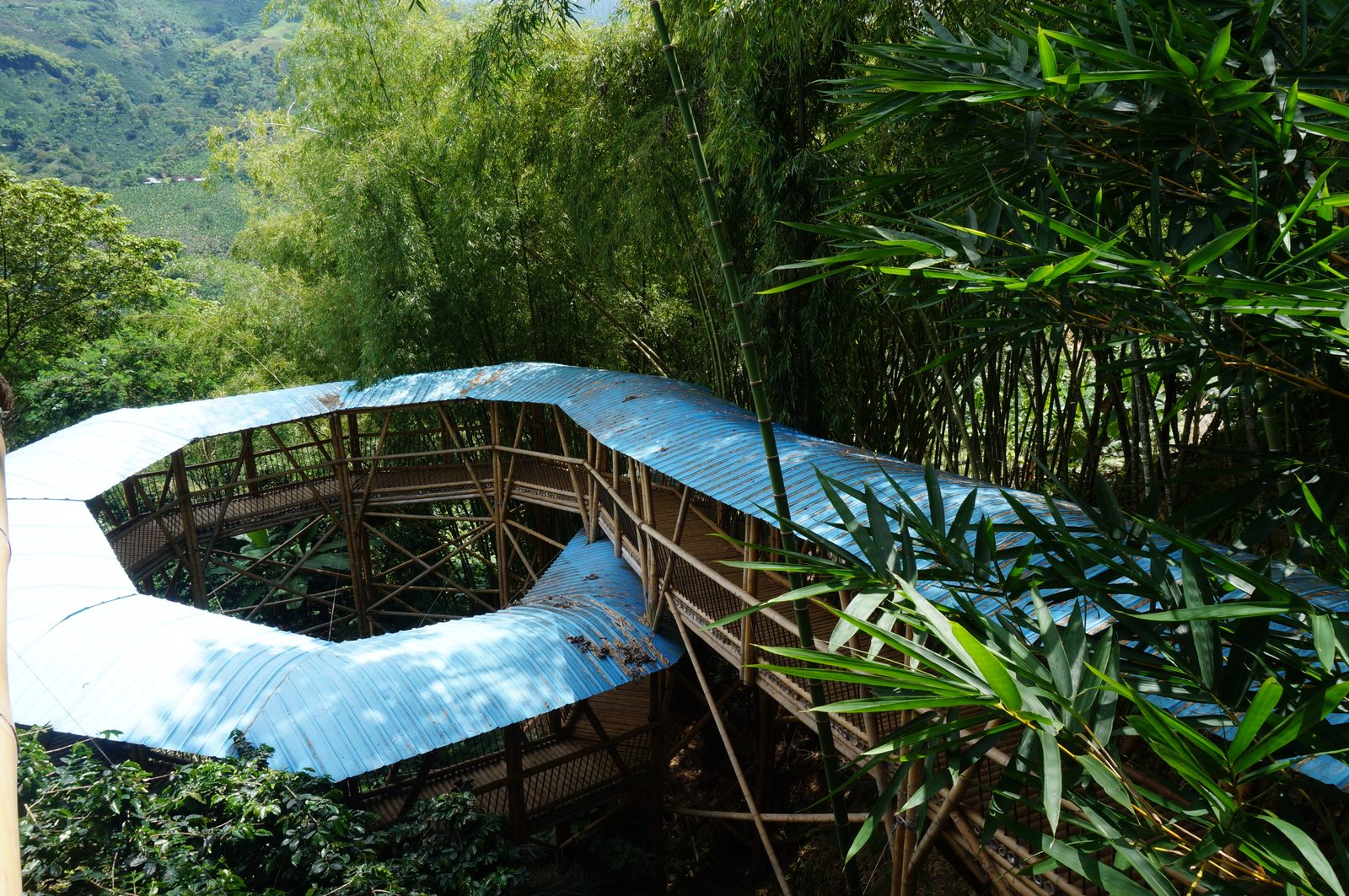
On the outskirts, coffee farms each have their own character: trails and structures built from guadua, the region's native bamboo, alongside specialty coffee, pitaya and avocado. Guadua is part of the scenery and of the craft: bridges and trails are built with it.
None of it was put there for photos. This is the daily life of a coffee town that, on top of everything, sees few tourists: it is still normal for a local to invite you for a tinto, the small black coffee Colombians share with strangers.
How do you experience the landscape instead of just looking at it?
A cultural landscape makes most sense through the people who make it. That is why our days are not built around viewpoints but around encounters. On the WakeCup Tour you spend a day in Pijao: coffee in the square, the growers' co-operative, a Jeep Willys up to Don Leo's farm, lunch with his family, picking, small-batch roasting alongside the growers and a cupping of specialty coffees. His farm, Villa Gloria, is one of the farms that make up this landscape.
If architecture and life behind the façades is more your thing, the Pijao Gardens Tour visits private gardens and medicinal plants in the town of colourful doors. Everything we do in the region is gathered on our Coffee Region page.
There is a line we have repeated for years because we keep seeing it happen: a cup of coffee is never the same once you have seen what lies at the other end of the chain.
How to visit with respect
A living heritage is looked after by travelling in a certain way. These are the rules we follow, and the ones we suggest to you:
- Small groups. On our day tours we travel in groups of ten people at most, so a visit never turns into an invasion.
- The money stays local. Every experience involves more than four local suppliers and partners: the family who cooks, the grower who opens the farm, the Willys driver, the guide who knows every story.
- Buy direct. If you want to take coffee home, buy it from the person who grew it. It is the shortest route for value to reach the farm. Why this matters is the subject of The truth about the coffee Colombians drink.
- Listen before you photograph. Houses, farms and kitchens are homes. Ask before you walk in or take a picture.
How to get to southern Quindío
The gateway is Armenia, the capital of Quindío. Pijao is 45 minutes to an hour by road from El Edén airport, and the southern mountains, home to Buenavista, Pijao and Génova, are about an hour from the city. We can arrange transport from Armenia, Salento or Buenavista if you need it.
Want to experience the Coffee Cultural Landscape with the people who shape it? Message us on WhatsApp and we will help you plan your days.
Keep reading
- First time in Pijao? Here's what's worth doing there.
- If you'd rather live it than just read about it, start with what a coffee farm tour in Colombia is really like.
- To book or see what's included, go to the WakeCup Tour page.