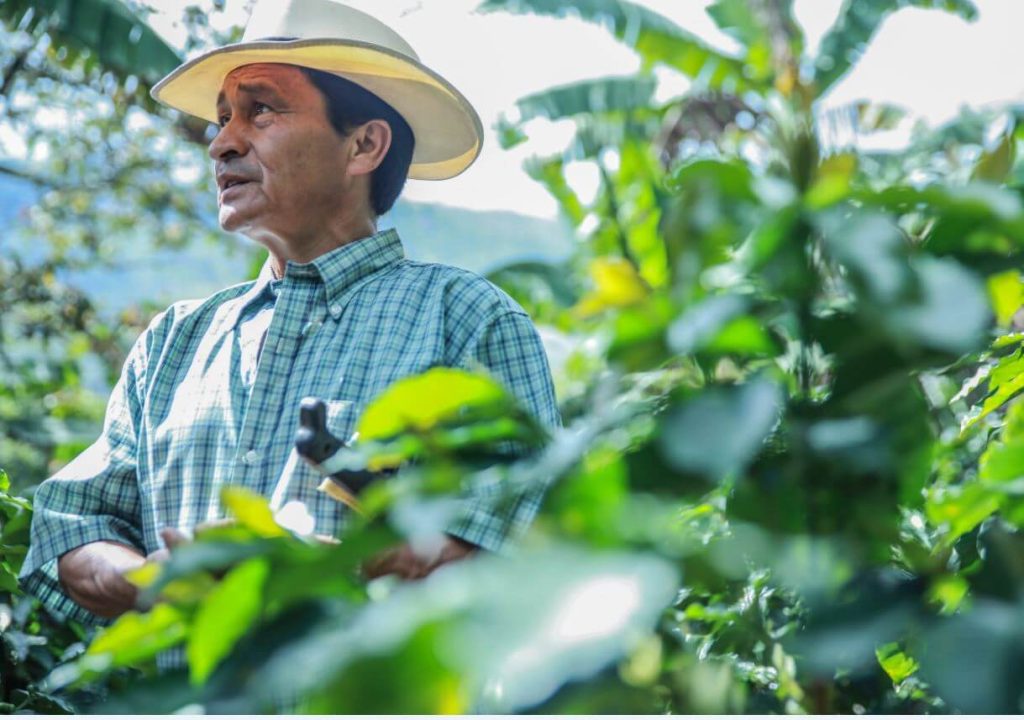
The farmer has become invisible somewhere along the chain of processed food.
A cup of coffee is an everyday food: early mornings, long afternoons, shared moments, a push to keep going late in the day. The sepia liquid doesn't look like it came from a plant. Not even the beans in the bag look like the red fruit that gives the drink its life.
What final product could exist without a farmer tending their leafy plants? Whether it's served in a plastic cup, a glass jug or a chipped mug, where else could it come from but the land?
Coffee culture brings us together. It joins moments and people. A farmer on his land drinks coffee with his workers in just the same way an executive drinks coffee at a meeting 80 floors up in a skyscraper.
There is a lot of inequality in the world of coffee
Picture this: a city dweller pays about three dollars a day for a latte made with 14 grams of roasted coffee. Those same three dollars buy a kilo, 1,000 grams, of dried, unroasted coffee from a farmer scraping by on a coffee farm.
And farmers can't even count on that price, which changes every day with international commodity markets. They will rarely drink their coffee in its most valued form, hundreds of kilometres away in a distant city. Instead, they receive a fraction of the final price, one that doesn't reflect the time and passion they put into their work.
How did we come to value a cup a barista makes in two minutes more than the person who spends years perfecting what goes into it?
In Colombia, coffee of excellent quality is called "export quality" coffee. For years, Colombian farmers were represented by Juan Valdez, a character created by an advertising agency in New York. In reality, Colombian coffee is represented by a rich variety of farms and growers.
Do you know what happens behind a cup of coffee?
As you take a sip, picture a green shrub with glossy, wavy leaves. Red "cherries" cluster in rings along its long branches.
The grower carefully chooses which plots will be harvested, weighing the weather, the soil and other conditions that could affect the flavour in the cup. Then the pickers go out for the fruit, climbing steep slopes to reach the crimson cherries, filling sacks, getting bitten by insects, working in the rain and the sun.
They bring the coffee to the processing area. To produce specialty coffee, local women sort through the beans by hand, separating the defective ones from the best. Next, the farmer runs the beans through a machine that strips off the outer skin, and the bare, whitish beans are left to ferment in plastic buckets.
The best coffees go through another hand selection. Then the wet, greenish beans are laid out to dry in the sun. Days later, the farmers fill sacks with coffee "in parchment", still wrapped in a dry skin. That is usually what gets sold to roasters in faraway countries. Many coffee growers have never tasted the final, roasted product from their own farms.
Coffee growers' work deserves recognition
We give that recognition with every bag we sell. In cities, where ideas fizz faster and personal habits can turn into movements with a single click, our coffee has an educational mission. Educational, because we know that learning to drink good coffee means breaking old habits, and that is what education is for.
Colombian coffee is known around the world for its smoothness, sweetness and acidity. Those are exactly the qualities that commercial brands have taken out of our hands. We've come to believe that coffee is bitter, and that coffee that "tastes like coffee" is the burnt kind.
We want to show Colombians what their own coffee really tastes like
Mahatma Gandhi walked hundreds of kilometres just to pick up a handful of salt, a symbolic act of taking back what was theirs. In the same spirit, we propose that Colombians ask for the first and last name of the man or woman who got up before dawn to pick the ripest cherries, and stayed up late so they wouldn't turn sour.
Colombia is at a moment when it is asking for peace. We know that in Colombia there is no act more peaceful and kind than a coffee on the table, at a moment when people rediscover, and make peace with, what they do best: coffee.
Some have a porcelain cup to offer it in, some enamel, some plastic. But that gesture, that wish to share a moment, has no status and no social class. That's what unites us. Coffee unites us. Coffee is meeting, moment and ritual.
There is no greater confidant than coffee. No drink in the world has been a closer accomplice to brilliant ideas and irreverent words. Around coffee we are free to think, to be and to feel.
The American Revolution became real by sinking a shipload of tea: America once rose up against a great power by sinking the everyday habits of those who ruled it. The French Revolution, the origin of the rights of man and of republican democracy, began in a café, as the story goes.
Imagine what we can do, with the coffee farms, the wet mills, the drying sheds, the hands, the machines and the tables. It's time for our revolution to begin. We are all coffee people.
Let's drink what's ours
In Spanish, tomar means both to drink and to take. So when we say ¡Tomemos lo nuestro!, we mean both: let's drink what's ours, and let's take it back.
The man in the photo is Don Leo, the coffee grower who welcomes travellers to his farm, Villa Gloria, on our WakeCup Tour in Pijao. If you want to put a name and a face to your coffee, that's a good place to start.