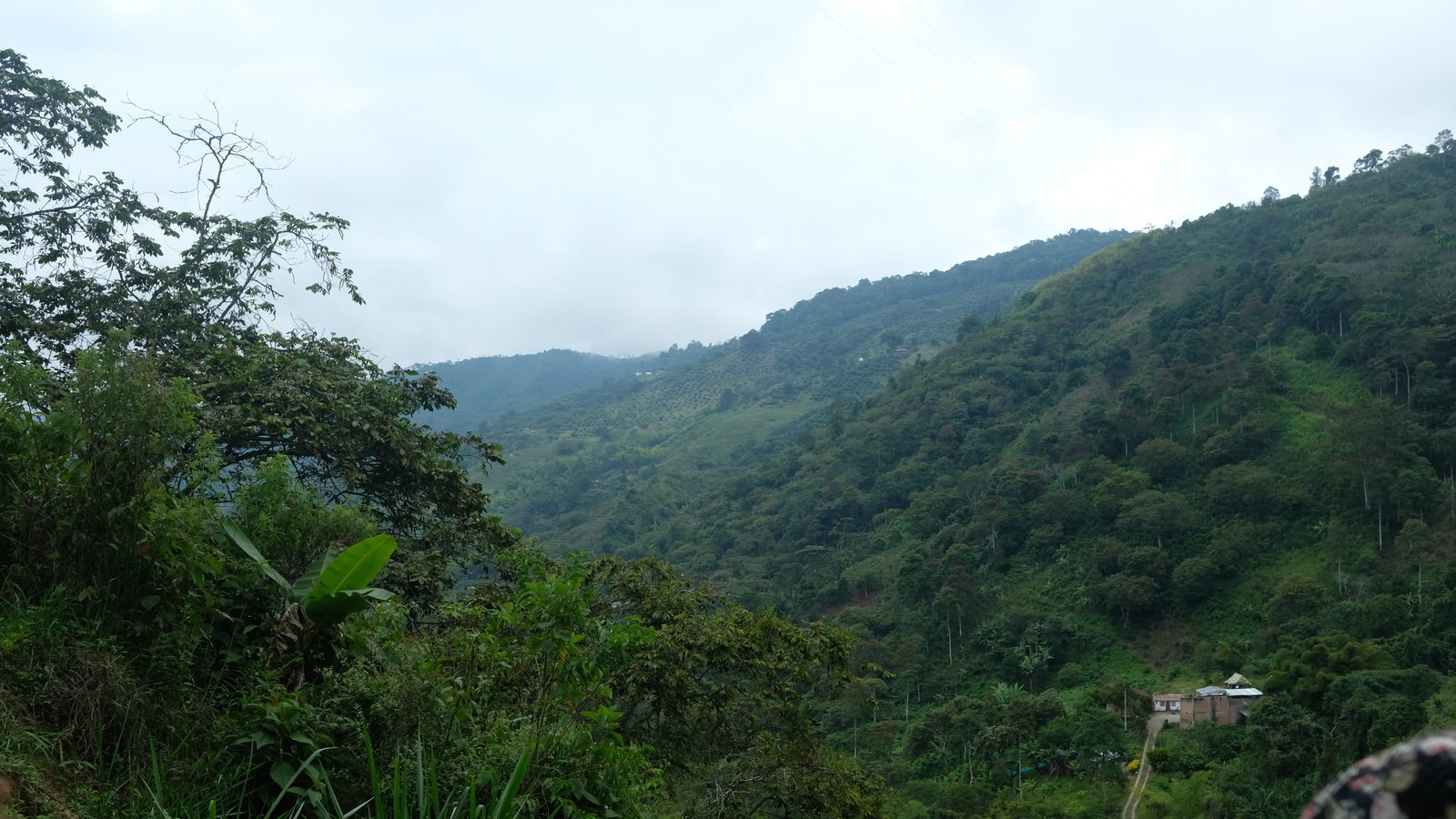
Colombia's coffee region is neither hot nor cold. In Pijao, a small coffee town in southern Quindío, temperatures in town usually stay between 18 and 24 °C (roughly 64 to 75 °F) all year round. Colombia has no four seasons; what changes here is how much it rains, and how high you climb. Up on the mountain, where the wax palm sanctuary is, it gets cooler and the mist rolls in. So the packing rule is the same whatever the month: layers, a light rain jacket and comfortable shoes.
What is the temperature like?
The best word for the climate is mild. In Pijao's town centre the temperature generally moves between 18 and 24 °C, and over the year it rarely strays far from 20 °C (68 °F). It is ideal weather for coffee, and for walking without suffering.
Neighbouring towns do differ. Pijao sits up in the mountains and feels fresher; Buenavista, perched on a lower ridge, is warmer because the sun hits it full on. On most days, jeans and a T-shirt are all you need.
When does it rain, and when is the dry season?
In Quindío the year divides into wetter and drier months, and locals call them, a little confusingly for visitors, winter and summer:
- Rainy season ("invierno", winter): there are two a year, one from February or March to May and another from September to November. Showers are short but heavy, one or two hours a day, and they almost always arrive in the afternoon. Mornings tend to be clearer.
- Between the two rainy seasons ("verano", summer): these are the months with the clearest days, though the odd shower still happens. Exact dates shift from year to year, so check the forecast a few days before you travel.
The rainy months have their own charm: the landscape is at its greenest and the mist gives Pijao a special atmosphere. The trick is simple: if you travel in those months, book outdoor activities for the morning.
Does altitude change the weather?
Yes, and you will notice it as you move around. Pijao sits at between 1,600 and 1,700 m above sea level, and coffee grows, on average, above 1,500 m. But the Andes keep climbing. In the area locals call Tierra Fría, the "cold lands", where we run the Wax Palms Expedition, the trail reaches about 2,400 m through high-Andean and cloud forest. It is cooler up there, the weather can turn quickly and the temperature changes along the way.
At that altitude some people feel mild symptoms of altitude sickness, such as tiredness or a headache. Drinking plenty of water and avoiding a heavy meal beforehand helps. If you have a medical condition, let the team know before the hike.
What happens if it rains on tour day?
Our experiences are not cancelled because of rain: we adapt them. Every tour has a plan B for any weather, and in practice Pijao's weather rarely forces us to call anything off. Paragliding, run by a partner, does depend on the weather.
Up in the high mountains the weather does change faster than in town, which is why the packing list for the Wax Palms Expedition is longer. What happens to your booking if you need to change the date is set out in our cancellation policy.
What to do in Pijao on a rainy afternoon
Since the showers usually arrive after lunch, it helps to have a plan for that stretch of the day. Pijao is a place to enjoy slowly, and several of the things locals recommend suit a rainy afternoon well:
- The town's cafés. Order a cup of local coffee and watch the downpour from inside.
- The square. Sit and take in the slow pace of town life: here that counts as a plan, not wasted time.
- El Patio, with Doña Ligia, to learn about medicinal plants.
When the rain stops, the landscape is washed clean and green, perfect for a walk around town or, as people here say, for a bit of pueblear, hopping between neighbouring towns.
What should I pack?
This is the core list, and it works for any month:
- Layers. Light shirts and comfortable trousers for the day, plus a warm layer for the evening or the mountain.
- A light waterproof jacket or poncho, whatever your travel dates.
- Comfortable closed shoes for walking around town and the farm.
- Sunscreen and insect repellent. Mountain sun burns even on a cool day, and there are insects wherever the vegetation is thick.
- Cash. Withdraw money in Armenia before heading to the small towns: along the way you can buy specialty coffee straight from the grower, and out in the countryside people mostly deal in cash.
- Water. If you are staying in Pijao, bring bottled water or a filter bottle.
What to bring for each tour
Each experience asks for something slightly different. Here is what we suggest:
- WakeCup Tour, the day on the farm: comfortable shoes, repellent, sunscreen and cash to buy coffee. The physical effort is very low, so no special gear is needed.
- Wax Palms Expedition: hiking boots or trainers with good grip (no sandals or flat shoes), layers with a windbreaker or rain jacket, long trousers, a cap or hat, UV sunglasses and, if it is cold, gloves and a scarf. Carry a small backpack with at least one extra litre of water and some snacks, such as nuts, cereal bars or a bocadillo de panela, a traditional sweet made with unrefined cane sugar. Water is included on the tour, but an extra bottle never hurts.
- Cocora Valley: a light rain jacket, because the weather can change at any moment.
- Horseback riding: long trousers, closed shoes, a hat and sunscreen.
- Birdwatching: dark-coloured clothing. We provide the binoculars.
When is the best time to visit?
Because the climate is so stable, any time of year works. What changes is what you will find:
- April to June is usually the main coffee harvest in the region: the best time to see coffee at full intensity.
- Towards the end of the year comes the smaller harvest, the traviesa, with a calmer atmosphere that is just as authentic. Every farm keeps its own calendar, so if your trip is built around picking, ask us about your dates.
- Christmas and New Year are when Pijao opens its doors: shared tables, music and colour.
Keep the Colombian holiday calendar in mind: Easter week, June and July, October, Christmas, New Year and the long weekends known as puentes are peak travel times for Colombians. Accommodation in Pijao can be limited then, so book early.
What is the region like right now?
If you are wondering how things are in the region today and whether it is safe to travel, we answer that in detail in Is it safe to visit Colombia's coffee region right now?. And if you already have dates in mind, we can tell you what the weather is usually like then and which experiences fit best.
Message us on WhatsApp and we will help you choose your days.
Keep reading
- To go up with us, see the Wax Palms Expedition.